
Jump to a section
At a glance
Key takeaways
- The UAE transfer pricing rules apply the arm’s-length principle to domestic and cross-border controlled transactions.
- Businesses should identify related parties, classify transactions and document the pricing method consistently.
- Older guidance must be checked against current legislation and Federal Tax Authority publications before relying on it.
This Transfer pricing Guide explains the UAE arm’s length rules, disclosure thresholds, documentation requirements, accepted methods, benchmarking process and important 2026 developments. It is designed for UAE companies, Free Zone businesses, multinational groups, family-owned groups, owners, directors and finance teams that enter into transactions with Related Parties or Connected Persons.
Quick answer: UAE transfer pricing rules are not limited to international groups. Domestic and cross-border Controlled Transactions must satisfy the arm’s length standard. Separate thresholds determine whether the detailed Related Party or Connected Person schedules, Master File and Local File are required; falling below a documentation threshold does not remove the underlying arm’s length obligation.
Transfer pricing Guide UAE: Key Rules at a Glance
15 Essential UAE Transfer pricing Rules
- Apply the arm’s length principle to domestic and cross-border Controlled Transactions.
- Map Related Parties and Connected Persons separately because the definitions and return schedules differ.
- Complete the Related Party Schedule when aggregate Related Party transactions exceed AED 40 million.
- After crossing AED 40 million, disclose each transaction category above AED 4 million.
- Assess the Connected Person Schedule when aggregate Connected Person transactions exceed AED 500,000.
- Prepare a Local File when the AED 3.15 billion MNE Group test or AED 200 million Taxable Person revenue test is met.
- Prepare a Master File only where the qualifying Taxable Person is part of an MNE Group.
- Maintain reasonable supporting records even when formal documentation thresholds are not met.
- Be ready to provide requested supporting information generally within 30 days.
- Accurately delineate each material transaction before choosing a method or comparable set.
- Use the most appropriate method—not the method that merely produces the preferred result.
- Separate pass-through costs, shareholder activity, duplicate services and value-adding costs.
- Use reliable internal comparables first and justify any regional or global external search.
- Review Free Zone and QFZP transactions together with the wider qualifying-income analysis.
- For a downward Tax Return adjustment, disclose every affected Related Party transaction and retain full supporting evidence.
Contents
- What transfer pricing means in the UAE
- Who must comply
- Related Parties and Connected Persons
- Disclosure thresholds
- Master File, Local File and supporting records
- How to apply the arm’s length principle
- The five transfer pricing methods
- Benchmarking and the interquartile range
- Guidance for common Controlled Transactions
- Free Zone and QFZP considerations
- Important 2026 developments
- Compliance checklist and common risks
- Frequently asked questions

What Is Transfer pricing in the UAE?
Transfer pricing is the pricing of transactions and arrangements between Related Parties or Connected Persons. The purpose of the UAE rules is to ensure that the conditions applied between associated persons are comparable to those that independent parties would have agreed in similar circumstances.
The core requirement is the arm’s length principle. Article 34 of the UAE Corporate tax Law requires Controlled Transactions to meet this standard when Taxable Income is determined. The practical framework is explained in the FTA Transfer pricing Guide and is broadly aligned with the OECD Transfer pricing Guidelines.
This Transfer pricing Guide is an independent practical summary, not a substitute for the legislation or transaction-specific advice. The legal result depends on the contract, actual conduct, functions performed, assets used, risks controlled, economic circumstances and the reliability of available comparable data.
Why Transfer pricing Matters
Transfer pricing affects more than the price shown on an intercompany invoice. It can change taxable profit, deductible expenditure, Free Zone outcomes, withholding or foreign tax exposure, customs positions, accounting true-ups and the consistency of tax returns filed by both parties. A policy that appears commercially reasonable may still fail if it is unsupported, applied inconsistently or contradicted by the actual conduct of the parties.
- Corporate tax: non-arm’s-length pricing can produce upward or downward adjustments to Taxable Income.
- Audit readiness: the FTA may ask how a price, margin, interest rate, royalty or allocation was selected.
- Free Zone compliance: transactions involving entities subject to different tax outcomes require particular care.
- Financial reporting: year-end true-ups should reconcile to invoices, ledgers, financial statements and the Corporate tax Return.
- Governance: agreements, approvals, benefit evidence and actual conduct should tell the same commercial story.
Who Must Follow the UAE Transfer pricing Guide?
The UAE transfer pricing provisions apply whenever a Taxable Person has a Controlled Transaction with a Related Party or Connected Person. They are not confined to large multinational groups and are not restricted to cross-border dealings.
- Transactions between UAE companies under common ownership or control.
- Transactions between a UAE entity and an overseas parent, subsidiary, sister company or other Related Party.
- Transactions involving a mainland company and a Free Zone Person, or two Free Zone entities.
- Relevant dealings between a head office and a domestic or foreign Permanent Establishment.
- Payments or benefits provided to owners, directors, officers and other Connected Persons.
- Controlled supplies of goods, services, financing, guarantees, intellectual property, leases, business transfers and other arrangements.
An entity may be outside the Master File and Local File thresholds and still need to apply the arm’s length principle. Likewise, an entity that has elected for Small Business Relief may be relieved from formal transfer pricing documentation requirements for that period but remains subject to the arm’s length standard for Controlled Transactions.
Related Parties and Connected Persons
A sound Transfer pricing Guide must distinguish Related Parties from Connected Persons. The categories overlap in some cases, but the legal tests, return schedules and deduction rules are not identical.
Do not classify a person solely from an organisation chart or job title. The April 2026 FTA clarification explains that the title “director” alone does not make a person a director for Article 36, while an “officer” analysis focuses on actual authority, including final strategic decision-making or authority to bind the Taxable Person.
Transfer pricing Guide to UAE Disclosure Thresholds
The detailed schedules are threshold-based, but the arm’s length rule is not. The current Corporate tax Return guidance uses separate tests for Related Party transactions and Connected Person payments or benefits.
The schedules form part of the Corporate tax Return. Businesses should therefore map Related Parties and Connected Persons early, code transaction categories consistently and reconcile the disclosure population to the general ledger, trial balance, financial statements and tax computation.
Important Rule for Downward Adjustments
In July 2026, the FTA clarified that a Taxable Person does not need prior FTA approval to make an appropriate transfer pricing adjustment in its Tax Return. However, where the adjustment reduces Taxable Income, all affected Related Party transactions must be disclosed regardless of their value or nature.
The supporting file should explain why the original accounting result was not arm’s length and should include the arm’s length analysis, a benchmarking study where relevant, a reconciliation from the financial statements to the adjusted Tax Return figures and evidence of symmetrical corresponding adjustments by the relevant Related Parties. A downward adjustment remains open to FTA review or audit.
Transfer pricing Guide to Master File and Local File Requirements
The Local File requirement is generally triggered by one of two size tests. Under Ministerial Decision No. 97 of 2023, it applies where the Taxable Person is a Constituent Company of an MNE Group with consolidated revenue of at least AED 3.15 billion in the relevant Tax Period, or where the Taxable Person’s own revenue is at least AED 200 million. A Master File is relevant only where the qualifying Taxable Person is part of an MNE Group.
The Local File should not be treated as a generic group document. It should connect the legal agreements and actual conduct to the UAE entity’s financial results. Transaction categories should be tested separately unless aggregation is economically justified and produces a reliable outcome.
Contemporaneous preparation is preferable. Waiting until an FTA request arrives can create avoidable problems where agreements are unsigned, allocation keys cannot be reproduced, comparables have changed, source data is unavailable or year-end true-ups were not booked consistently by both parties.
How to Apply the Arm’s Length Principle
This Transfer pricing Guide uses a three-stage process: accurately delineate the Controlled Transaction, select the most appropriate method and determine an arm’s length result. The quality of the first stage determines the reliability of everything that follows.
- Identify and accurately delineate the transaction. Review the written contract, invoices, accounting entries and actual conduct. Establish what was supplied, by whom, for whose benefit, under which terms and with which economically significant risks.
- Perform a functional analysis. Record the functions performed, assets used and risks assumed and controlled by each party. Include decision-making capability, personnel, financial capacity and the party that actually manages each risk.
- Select and apply the most appropriate method. Consider the nature of the transaction, strengths and limitations of each method, availability and quality of comparable data and the reliability of any adjustments.
Functions, Assets and Risks Analysis
A Functions, Assets and Risks analysis—commonly called a FAR analysis—should describe substance rather than repeat job titles. For example, a company may legally own an asset while another group entity operates it, makes key decisions or controls commercial risks. The remuneration should reflect the economically significant contribution established from the facts.
- Functions: procurement, sales, manufacturing, logistics, treasury, marketing, strategy, contract negotiation, quality control, administration and support services.
- Assets: plant, equipment, vessels, inventory, systems, customer relationships, brands, know-how and other tangible or intangible assets.
- Risks: market, inventory, credit, foreign exchange, product liability, capacity, financing, obsolescence and development risk.
- Control of risk: who makes the key decisions, monitors the risk, has the capability to respond and possesses the financial capacity to bear the outcome.
Transfer pricing Guide to the Five Accepted Methods
The UAE Corporate tax Law recognises five standard transfer pricing methods. There is no automatic method for every transaction. The objective is to choose the method that most reliably tests the accurately delineated Controlled Transaction.
Can Another Method Be Used?
Yes. A Taxable Person may use another method where it can demonstrate that none of the five recognised methods can reasonably be applied and that the alternative produces an arm’s length result. Depending on the transaction, this may include a valuation technique such as discounted cash flow. The reason for rejecting the standard methods and the assumptions used in the alternative approach should be documented.
Pass-Through Costs and Mark-Ups
A mark-up should not be applied mechanically to every recharged cost. Where a group company merely pays an independent-party expense on behalf of another entity and adds no value, the amount may be a pass-through item. By contrast, costs connected with the provider’s own value-adding functions normally form part of the relevant remunerated cost base. The analysis should distinguish shareholder activity, duplicate activity, incidental benefits, direct services, shared services and genuine pass-through costs.
Transfer pricing Guide to Benchmarking and the Interquartile Range
Benchmarking tests whether the controlled price, rate or profit indicator is consistent with reliable independent evidence. It is not simply a database export. A defensible study records the search strategy, screening criteria, qualitative review, financial calculations, adjustments, rejected companies and final arm’s length range.
Internal and External Comparables
The FTA does not prescribe one commercial database. Reliability matters more than brand. The preferred progression is generally local comparables, then regional Middle East comparables, followed by other regions when domestic and regional evidence is insufficient. A broader geography should be justified and adjusted where material market differences exist.
Multiple-Year Data and Search Refresh
For transactional profit methods, multiple-year data can reduce the influence of short-term volatility and help explain business cycles. The FTA guide indicates that a three-year period including the tested year is typically examined, with at least two years of data available for a comparable company. A full comparable search should normally be refreshed every three years, with financial data updated annually in the interim, unless a material change requires an earlier full update.
Interquartile Range (IQR)
Where a sizeable set of observations exists, the interquartile range narrows the results to the middle 50%—from the lower quartile to the upper quartile—and limits the influence of outliers. Any point within a reliable arm’s length range can be acceptable, but the selected point should reflect the transaction and functional profile. A limited-function, low-risk entity may support a point nearer the lower quartile, while a party performing higher-value functions, employing assets and controlling risks may support a higher point.
Do not select a quartile first and build the analysis backwards. The reliable range, tested party, indicator and point should emerge from the transaction’s facts, the comparable evidence and any necessary working-capital or other comparability adjustments.
Common Benchmarking Data Sources
Transfer pricing Guide for Common Controlled Transactions
1. Goods, Trading and Distribution
For related-party purchases and sales of goods, analyse product characteristics, volumes, delivery terms, market level, geography, currency, credit period, warranties and inventory risk. CUP may be strongest where close product-level data exists. RPM may suit a routine reseller, while TNMM may be more reliable where gross-margin data is inconsistent or product differences prevent a reliable price comparison.
2. Intra-Group Services and Management Fees
A service charge requires evidence that a service was actually provided and that the recipient obtained an economic or commercial benefit for which an independent party would have been willing to pay. The file should identify service categories, personnel, time or cost records, allocation keys, recipient benefits, excluded shareholder activity, duplicate services and pass-through costs.
A cost-plus policy must define the cost base before applying the mark-up. Payroll, external professional fees, travel, IT, premises and other costs may require different treatment depending on the service and who benefits. An allocation key—such as headcount, users, transactions, revenue or time spent—should have a logical link to expected benefit and be used consistently.
3. Intercompany Loans, Guarantees and Cash Pooling
Financial transactions require more than comparison with a headline market interest rate. The analysis should consider currency, principal, drawdown pattern, term, repayment profile, seniority, security, guarantees, purpose, borrower creditworthiness, group support, options and the lender’s realistic alternatives. A loan benchmark may combine a base rate or swap curve with an arm’s length credit spread.
For guarantees, determine whether the borrower receives a measurable benefit beyond implicit group support. The method may examine the reduction in borrowing cost, expected loss, capital usage, comparable guarantee fees or other evidence. Cash-pool participants should be rewarded according to their functions and risks; a cash-pool leader performing only coordination should not automatically earn the return of a full-fledged treasury company.
4. Intellectual Property and Royalties
Legal ownership alone does not determine entitlement to intangible returns. Analyse who performs and controls the development, enhancement, maintenance, protection and exploitation—often referred to as DEMPE—of the intangible. Royalty benchmarking should examine the licensed rights, exclusivity, territory, term, stage of development, expected profit, marketing contribution and contractual restrictions.
5. Permanent Establishments and Business Restructuring
Dealings between a head office and Permanent Establishment must reflect the functions, assets and risks attributed to the establishment. Business restructuring may involve the transfer or termination of functions, assets, rights, contracts or profit potential. The analysis should ask whether independent parties would have paid compensation and whether the post-restructuring remuneration reflects the new functional profile.
Transfer pricing Guide for Free Zone and QFZP Businesses
Free Zone status does not remove transfer pricing obligations. Transactions between a Free Zone Person and its Related Parties or Connected Persons remain subject to the arm’s length principle. This includes transactions with mainland entities, overseas affiliates and other Free Zone companies.
For a Qualifying Free Zone Person, transfer pricing can affect the amount and character of income, the reliability of profit allocation and the maintenance of adequate documentation. Transactions between persons subject to different effective tax outcomes deserve particular attention because pricing errors may shift profit into or out of the qualifying regime.
Businesses should integrate their transfer pricing review with the wider Qualifying Free Zone Person assessment, including beneficial-recipient conditions, qualifying and excluded activities, Permanent Establishments, immovable property, intellectual property and de minimis calculations. A transaction that is arm’s length can still require separate QFZP analysis; transfer pricing compliance does not by itself determine whether income is qualifying.
Transfer pricing Guide: Important UAE Developments in 2026
Three developments materially improve the current compliance picture: the launch of the UAE Advance Pricing Agreement framework, clarification of “director” and “officer” for Connected Person rules, and the July 2026 clarification on downward transfer pricing adjustments.
1. UAE Advance Pricing Agreements
The FTA’s initial APA programme covers unilateral Advance Pricing Agreements for prospective Tax Periods. An APA can provide prospective certainty on the method and pricing of qualifying Controlled Transactions, subject to the agreed critical assumptions and ongoing compliance.
- Materiality indicator: the total expected value of the Controlled Transactions proposed for the APA is generally at least AED 100 million per Tax Period. Meeting this amount does not guarantee acceptance; the FTA considers complexity and other facts.
- Covered period: a minimum of three and a maximum of five Tax Periods at the initial stage.
- Application fee: AED 30,000, with a separate AED 15,000 renewal fee under the current guide.
- Scope: domestic or cross-border transactions may qualify. Certain domestic transactions involving different tax rates or incentives, including QFZP-to-mainland arrangements, may be considered.
2. Director and Officer Clarification
The April 2026 public clarification emphasises substance. A “director” generally refers to a position on the board or an equivalent governing body; placing “director” in a job title is not sufficient. An “officer” is determined by actual authority and may include a person who plans, directs or controls activities, makes strategic financial, operational or commercial decisions, or can bind the Taxable Person.
This affects management remuneration and Connected Person reviews. Companies should examine board documents, delegations of authority, signing rights, job descriptions, actual conduct and the market value of the service or benefit—not only payroll titles.
3. Downward Transfer pricing Adjustments
Public Clarification CTP011 confirms self-assessment: prior FTA approval is not required for a transfer pricing adjustment made in the Tax Return. For a downward adjustment, the compliance burden is nevertheless significant. The Taxable Person must disclose every affected Related Party transaction, retain the rationale and arm’s length analysis, reconcile the accounting and tax values and support corresponding treatment by the other party.
Because the older Corporate tax Returns Guide contains wording that referred to an application for a downward adjustment, businesses should follow the later July 2026 clarification for this specific point while checking the latest EmaraTax form and guidance when filing.
Transfer pricing Compliance Lifecycle
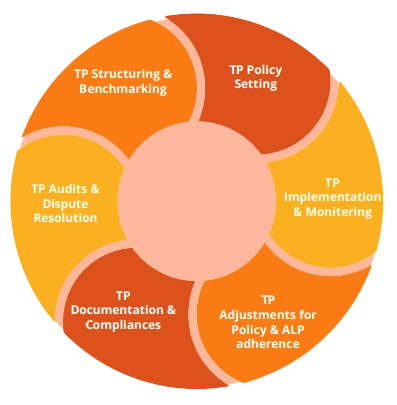
- Map the group and persons: identify direct and indirect ownership, control, relatives, partners, directors, officers, PEs and Free Zone status.
- Build the Controlled Transaction register: reconcile agreements, ledgers, invoices, confirmations and financial statements by counterparty and category.
- Perform FAR and benefit analyses: interview operational staff and record actual functions, decision-making, assets, risks and recipient benefits.
- Select the pricing method: assess internal comparables first, then perform external benchmarking or valuation where necessary.
- Set or test the price: establish the arm’s length price, margin, interest rate, fee or allocation and document assumptions.
- Monitor during the year: compare actual results with policy, investigate variances and calculate any true-up before finalisation.
- Prepare documentation and return disclosures: reconcile the Local File or supporting memorandum to the Corporate tax Return schedules.
- Retain evidence and refresh: update financial data annually, refresh comparable searches when due and revise the analysis when facts change.
Transfer pricing Guide Compliance Checklist
- Updated legal and organisational structure identifying Related Parties, Connected Persons and Permanent Establishments.
- Signed intercompany agreements that reflect the actual transaction and conduct.
- Transaction matrix reconciled to the trial balance, general ledger, financial statements and tax computation.
- Documented FAR analysis and, for services, a clear benefit test and allocation methodology.
- Method-selection memorandum explaining why the chosen method is the most appropriate.
- Benchmarking or valuation evidence with reproducible calculations and source records.
- Separate identification of pass-through costs, shareholder activity, duplicate services and non-operating items.
- Year-end true-up calculations and corresponding entries by both parties.
- Assessment of AED 40 million, AED 4 million and AED 500,000 return-schedule thresholds.
- Assessment of the AED 200 million and AED 3.15 billion Master File and Local File thresholds.
- Special file for any downward adjustment, including disclosure, rationale, benchmarking, reconciliation and symmetrical corresponding adjustment.
- Annual review of changes in functions, risks, agreements, market conditions and legislation.
Common Transfer pricing Mistakes
- Assuming domestic UAE transactions are outside the rules.
- Using the disclosure thresholds as an exemption from the arm’s length principle.
- Applying one entity-wide margin to economically different transaction streams without a defensible aggregation analysis.
- Charging a mark-up on every cost, including pure pass-through expenditure or shareholder activity.
- Relying on an unsigned agreement that contradicts invoices, accounting records or actual conduct.
- Using a database range without a transparent search strategy, qualitative review or financial reconciliation.
- Benchmarking a loan without analysing currency, term, security, creditworthiness and realistic alternatives.
- Treating legal ownership of an intangible or asset as sufficient to claim all returns.
- Booking a one-sided true-up without considering the corresponding entry and disclosure position of the other party.
- Recycling an old benchmarking study after a material change in functions, transaction terms or economic conditions.
How SAIF Chartered Accountants can help
SAIF Chartered Accountants supports UAE businesses with transaction mapping, FAR interviews, policy design, disclosure reviews, benchmarking studies, financial-transaction analysis, Local Files, Master Files, QFZP transfer pricing reviews, year-end true-ups and FTA audit support. Our approach reconciles the legal agreements, operational facts, benchmarking evidence, accounting records and Corporate tax Return.
Learn more about our transfer pricing services in Dubai and the UAE or review our UAE Corporate tax advisory services.
Frequently Asked Questions About the UAE Transfer pricing Guide
What is transfer pricing in the UAE?
Transfer pricing is the pricing of transactions or arrangements between Related Parties or Connected Persons. UAE Corporate tax requires these Controlled Transactions to follow the arm’s length principle, meaning the conditions should be comparable to those independent parties would agree in similar circumstances.
Is transfer pricing mandatory in the UAE?
Yes. The arm’s length principle applies when a UAE Taxable Person enters into a Controlled Transaction with a Related Party or Connected Person. The rule can apply even when the transaction is domestic and even when the business is below the formal Master File, Local File or return-schedule thresholds.
Do UAE domestic Related Party transactions fall within transfer pricing rules?
Yes. UAE transfer pricing rules cover relevant domestic as well as cross-border Controlled Transactions. This includes dealings between mainland entities, Free Zone Persons, businesses under common ownership and certain head-office or Permanent Establishment arrangements.
What is the AED 40 million Related Party disclosure threshold?
The Related Party Schedule is generally required when the aggregate value of all Related Party transactions in the Tax Period exceeds AED 40 million. After that threshold is crossed, each transaction category whose aggregate value with all Related Parties exceeds AED 4 million must be disclosed.
What is the AED 4 million transfer pricing category threshold?
The AED 4 million test applies only after total Related Party transactions exceed AED 40 million. At that point, each reportable category—such as goods, services, intellectual property or financing—must be disclosed when its aggregate value with all Related Parties exceeds AED 4 million.
What is the AED 500,000 Connected Person threshold?
The Connected Person Schedule generally applies when aggregate transactions with Connected Persons, including their Related Parties, exceed AED 500,000. The schedule is then completed for each Connected Person whose aggregate payment or benefit, together with that person’s Related Parties, exceeds AED 500,000.
Who must maintain a Master File and Local File in the UAE?
A Local File is generally required where the Taxable Person is a Constituent Company of an MNE Group with consolidated revenue of at least AED 3.15 billion, or where its own revenue is at least AED 200 million. A Master File applies only where the qualifying Taxable Person is part of an MNE Group.
What records are required below the Master File and Local File thresholds?
A Taxable Person below the formal thresholds should still retain reasonable records that demonstrate the arm’s length nature of its Controlled Transactions. This may include agreements, invoices, FAR analysis, benefit evidence, calculations, market data, benchmarking and reconciliations. The FTA may generally request supporting information within 30 days.
Which transfer pricing method should a UAE business use?
Use the method that most reliably tests the accurately delineated transaction. The five recognised methods are CUP, Resale Price, Cost Plus, TNMM and Profit Split. The choice depends on the transaction, FAR analysis, quality of internal and external comparables and reliability of any adjustments.
What is a transfer pricing benchmarking study?
A benchmarking study identifies reliable independent transactions or companies and compares their prices, rates or profit indicators with the controlled result. A defensible study includes search criteria, qualitative review, financial calculations, comparability adjustments, rejected observations and an arm’s length range.
What is the interquartile range in transfer pricing?
The interquartile range is the middle 50% of a dataset, running from the lower quartile to the upper quartile. It is commonly used to reduce the effect of outliers. Any point within a reliable arm’s length range may be acceptable, but the selected point should fit the transaction’s functional profile.
Do Free Zone and QFZP companies need transfer pricing documentation?
Free Zone entities remain subject to the arm’s length principle. Formal Master File and Local File requirements depend on the applicable thresholds, but adequate supporting documentation is important for QFZP compliance, profit allocation and transactions with mainland, overseas or other Free Zone Related Parties.
Are Advance Pricing Agreements available in the UAE?
Yes. The initial FTA programme covers unilateral APAs for prospective periods. The guide uses an AED 100 million per Tax Period materiality indicator for proposed Controlled Transactions, while acceptance also depends on complexity and other facts. An APA generally covers three to five Tax Periods.
Does a downward transfer pricing adjustment require prior FTA approval?
No. Public Clarification CTP011 states that prior FTA approval is not required for a transfer pricing adjustment made in the Tax Return. However, every Related Party transaction subject to a downward adjustment must be disclosed regardless of value or nature, with rationale, arm’s length analysis, reconciliation and corresponding-adjustment evidence.
How did the FTA clarify director and officer in 2026?
The FTA clarified that a job title alone is not decisive. A director generally holds a board or equivalent governing-body position. An officer is assessed by actual authority, such as final strategic decision-making, planning and control responsibilities or authority to legally or contractually bind the Taxable Person.
Official Sources and Further Reading
- UAE Corporate tax Law — Federal Decree-Law No. 47 of 2022, as amended
- Federal Tax Authority: Transfer pricing Guide
- Federal Tax Authority: Corporate tax Returns Guide
- Ministerial Decision No. 97 of 2023 — Master File and Local File requirements
- Federal Tax Authority: Advance Pricing Agreements Guide
- FTA Public Clarification CTP010 — Director and officer
- FTA Public Clarification CTP011 — Downward transfer pricing adjustments
- OECD Transfer pricing Guidelines for Multinational Enterprises and Tax Administrations
Professional Disclaimer
This Transfer pricing Guide provides general information as at the technical review date. It does not constitute legal, tax, accounting or transfer pricing advice and should not be applied without considering the legislation, the latest FTA forms and guidance, and the specific facts of the transaction. Thresholds, procedures and interpretations may change.
Related reading: See our detailed, step-by-step guide on how a transfer pricing benchmarking study works in the UAE.
Authority and verification
Official sources
- UAE Federal Tax AuthorityTransfer Pricing Guide CTGTP1Checked 19 October 2026
Clear answers
Frequently asked questions
What is transfer pricing in the UAE?
Transfer pricing is the pricing of transactions or arrangements between Related Parties or Connected Persons. UAE Corporate tax requires these Controlled Transactions to follow the arm’s length principle, meaning the conditions should be comparable to those independent parties would agree in similar circumstances.
Is transfer pricing mandatory in the UAE?
Yes. The arm’s length principle applies when a UAE Taxable Person enters into a Controlled Transaction with a Related Party or Connected Person. The rule can apply even when the transaction is domestic and even when the business is below the formal Master File, Local File or return-schedule thresholds.
What is the AED 4 million transfer pricing category threshold?
The AED 4 million test applies only after total Related Party transactions exceed AED 40 million. At that point, each reportable category—such as goods, services, intellectual property or financing—must be disclosed when its aggregate value with all Related Parties exceeds AED 4 million.
What is the AED 500,000 Connected Person threshold?
The Connected Person Schedule generally applies when aggregate transactions with Connected Persons, including their Related Parties, exceed AED 500,000. The schedule is then completed for each Connected Person whose aggregate payment or benefit, together with that person’s Related Parties, exceeds AED 500,000.
Who must maintain a Master File and Local File in the UAE?
A Local File is generally required where the Taxable Person is a Constituent Company of an MNE Group with consolidated revenue of at least AED 3.15 billion, or where its own revenue is at least AED 200 million. A Master File applies only where the qualifying Taxable Person is part of an MNE Group.
What records are required below the Master File and Local File thresholds?
A Taxable Person below the formal thresholds should still retain reasonable records that demonstrate the arm’s length nature of its Controlled Transactions. This may include agreements, invoices, FAR analysis, benefit evidence, calculations, market data, benchmarking and reconciliations. The FTA may generally request supporting information within 30 days.
Which transfer pricing method should a UAE business use?
Use the method that most reliably tests the accurately delineated transaction. The five recognised methods are CUP, Resale Price, Cost Plus, TNMM and Profit Split. The choice depends on the transaction, FAR analysis, quality of internal and external comparables and reliability of any adjustments.
What is a transfer pricing benchmarking study?
A benchmarking study identifies reliable independent transactions or companies and compares their prices, rates or profit indicators with the controlled result. A defensible study includes search criteria, qualitative review, financial calculations, comparability adjustments, rejected observations and an arm’s length range.