Jump to a section
At a glance
Key takeaways
- July 2026 was the pilot and voluntary start, not a universal mandatory deadline.
- Use the amended first-group ASP appointment date of 30 October 2026.
- Assess entity and transaction scope before choosing an implementation timetable.
- Distinguish accounting advice, software configuration and accredited provider responsibilities.
UAE e-invoicing is a structured exchange and reporting process, not simply an invoice attached to an email. Businesses preparing for the rollout need to identify their applicable phase, assess invoice data and agree responsibilities with their software team and Accredited Service Provider (ASP).
This guide distinguishes the regulatory timetable from practical implementation work. It replaces the earlier version of this article that described July 2026 as a universal mandatory start. Read the current decisions and amendments together when assessing your entity.
Explore UAE e-invoicing readiness and implementation support
What is an eInvoice, and is a PDF sufficient?
The Ministry of Finance describes an eInvoice as structured data exchanged electronically and reported to the FTA. PDFs, scanned copies and emails are not themselves eInvoices. A readable invoice copy and the structured data used for exchange serve different purposes.
Read the official MoF definition and exchange model
UAE e-invoicing deadlines: the current phased timetable
| Group | Appoint an ASP by | Implement by |
|---|---|---|
| Revenue of AED 50 million or more | 30 October 2026 | 1 January 2027 |
| Revenue below AED 50 million | 31 March 2027 | 1 July 2027 |
| Government entities | 31 March 2027 | 1 October 2027 |
Decision 66 of 2026 amended the first-group ASP appointment date. Pilot and voluntary participation started on 1 July 2026; that date did not make the system mandatory for every business. Establish the entity’s applicable phase before building its implementation plan.
Decision 66 of 2026: amended appointment deadline
Decision 244 of 2025: rollout and revenue definition
Who needs to assess scope?
The framework covers business transactions, including B2B and B2G, with specified exclusions. It is not limited solely to VAT-registered entities. Free-zone status is not, on its own, an exemption. B2C transactions remain outside the current mandatory rollout until a further ministerial decision.
Map your counterparties and transaction types rather than using one label for the whole organisation. Group transactions, mixed activities and special cases deserve specific review. Consult the official scope and exclusion guidance instead of assuming that a VAT treatment automatically determines the e-invoicing result.
MoF guidelines: scope and exclusions
How the ASP process connects with accounting
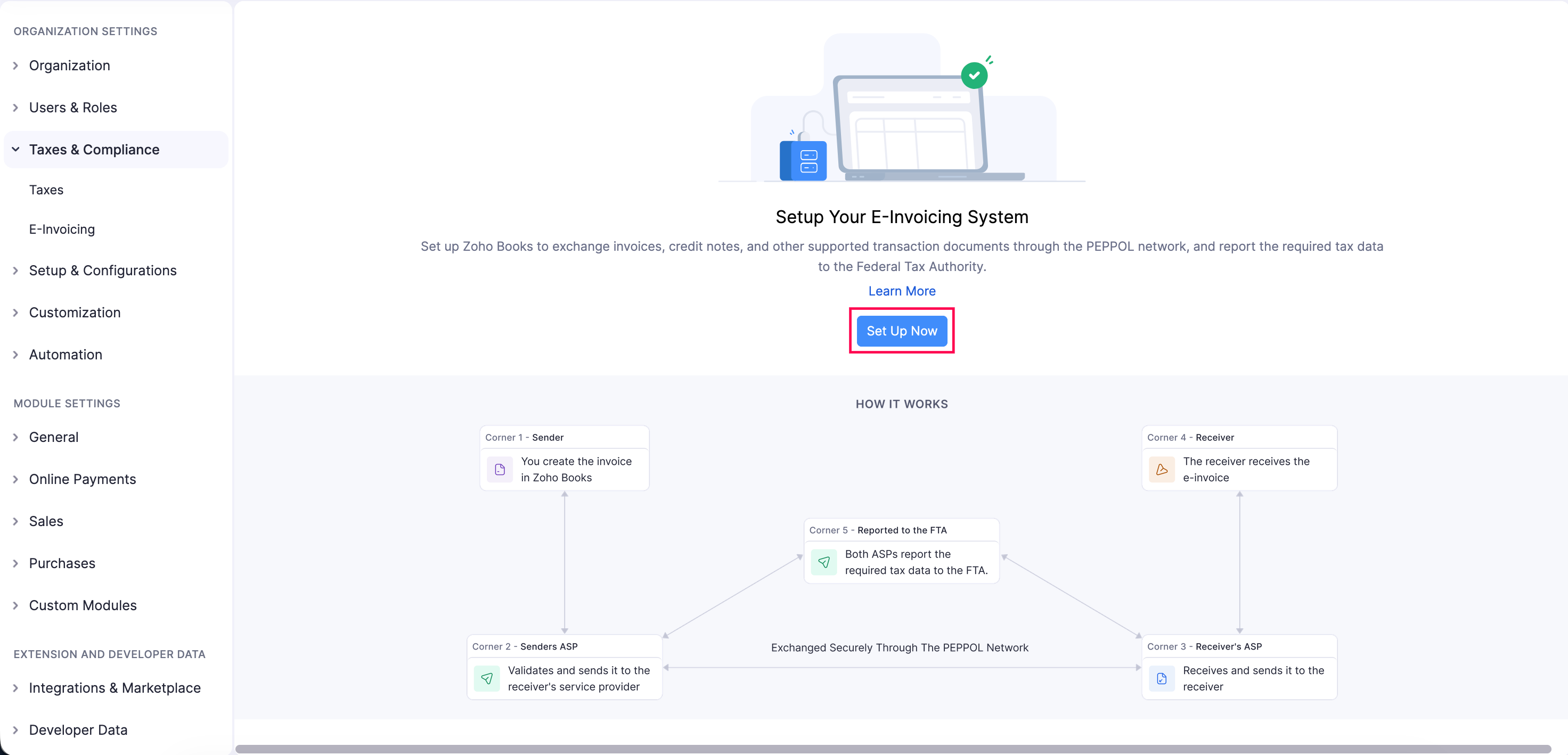
In the MoF model, the seller and buyer exchange invoice information through their respective ASPs, with tax-data reporting to the FTA and status messages through the process. PINT AE is the UAE invoice specification used in this framework. The ASP connection is different from an accountant’s review of the underlying records.
See the simplified invoice-flow diagram
Assign owners for failed messages, corrections and reconciliation. Finance needs to know which invoices remain unresolved, while the technical team needs enough information to investigate the cause. Do not treat a successful export from the ERP as proof that every later processing step has succeeded.
A practical readiness checklist
| Workstream | Questions to resolve |
|---|---|
| Entity and transactions | Which entities, activities and transaction flows must be assessed? |
| Master data | Are customer and supplier identifiers, addresses and tax information reliable? |
| Billing systems | Where do invoices originate, and who owns the source record? |
| Mapping | Which required data fields exist, and who resolves missing values? |
| Responsibilities | Who prepares, reviews, transmits, investigates and approves corrections? |
| Testing | Which normal and exceptional scenarios will be tested with evidence? |
| Operations | How are statuses, reconciliations, support and changes monitored? |
Use a gap register with an owner and completion evidence for each action. Prioritise issues that block a reliable invoice record, such as duplicate customer accounts, inconsistent identifiers or invoices generated in systems outside the main ledger. Separate policy decisions from technical configuration tasks.
Choosing software and coordinating with an ASP
Zoho Software Trading LLC is listed in the Ministry of Finance accredited-provider register under number 121988, checked 21 September 2026. This is Zoho’s accreditation; SAIF Chartered Accountants’ role is preparation, accounting and coordination support.
Verify Zoho in the official ASP register
Zoho Books UAE product information
There is no single best software choice for every UAE business. Compare the current system, transaction complexity, integration requirements, data controls and support arrangements. Verify provider status and functionality using current official information, not a logo or a general claim that a product is compliant.
SAIF Chartered Accountants primarily supports Zoho Books for accounting workflows and can discuss other platforms. Confirm the specific e-invoicing connection and responsible provider for your implementation. Odoo, ERPNext, Xero, QuickBooks, Tally and other installations should be assessed by version, configuration and the proposed ASP integration route.
- Ask who is responsible for software changes and which fees are separate from advisory work.
- Confirm how invoice and credit-note data, statuses and corrections reach the accounts.
- Review support hours, escalation, data access and exit/export arrangements.
- Use representative test records before relying on a sales demonstration.
Explore accounting software support
Test difficult transactions and agree acceptance criteria
A useful test plan reflects the business rather than only a simple domestic invoice. Include returns, credit notes, discounts, foreign currency, advances or project billing where relevant. Have the responsible tax and technical specialists agree the expected outcome of each scenario.
Document what was tested, the result, any defect and the person responsible for resolving it. Decide how duplicate attempts, rejected messages and changes to source records will be controlled. Management should understand unresolved limitations before approving operational use.
Does e-invoicing replace bookkeeping or tax returns?
No. Accounting still needs reconciliations, supported balances and appropriate adjustments. Applicable return-filing obligations continue. Structured invoice transmission is not a substitute for reviewing tax treatment or maintaining reliable records.
Connect the implementation plan to the monthly close. Review invoices against the sales ledger, customer balances and relevant tax accounts. Retain records in an accessible form under the applicable rules, with storage and retrieval responsibilities agreed between the company and providers.
UAE monthly bookkeeping checklist
How to start and what affects the quotation
Prepare a short brief covering entities, revenue band, software, invoice volumes and transaction types. Identify where billing happens outside the core accounting system and whether data is incomplete. Arrange a secure route for samples, removing unnecessary personal or commercially sensitive information.
Separate accounting/readiness support, ASP subscriptions, software licences and technical development. The scope should identify deliverables and responsibilities rather than promise a universal package or guaranteed compliance. SAIF Chartered Accountants provides a company-specific proposal for the support required.
Discuss UAE e-invoicing readiness with SAIF Chartered Accountants
Authority and verification
Official sources
- Ministry of FinanceUAE e-invoicing portalChecked 21 September 2026
- Ministry of FinanceMinisterial Decision 66 of 2026Checked 21 September 2026
- Ministry of FinanceMinisterial Decision 244 of 2025Checked 21 September 2026
- Ministry of FinanceElectronic Invoicing Guidelines, version 1.1Checked 21 September 2026
Clear answers
Frequently asked questions
Is 1 July 2026 the mandatory deadline for all UAE businesses?
No. It was the pilot and voluntary start. Mandatory implementation is phased; assess the current decision and any amendments for your entity.
What changed for the AED 50 million revenue group?
Decision 66 of 2026 moved the ASP appointment deadline to 30 October 2026. Implementation remains due by 1 January 2027 for persons in that group who are subject to the system.
Does emailing a PDF satisfy the e-invoicing requirement?
No. An unstructured PDF or email is not itself the structured eInvoice defined by the Ministry of Finance. Confirm the required exchange and reporting arrangements with the relevant provider.
Can we retain our accounting software?
Possibly. Check your version, data fields and integration options with the software vendor and ASP. A software brand name alone does not establish readiness.
Is an accounting adviser the same as an ASP?
No. Accounting and readiness advice is different from the accredited provider role in electronic exchange and reporting. Confirm the responsibilities and provider status before appointment.
Are all transactions treated the same?
No. Assess counterparties, activities and exclusions. Do not assume the same route for business and consumer transactions or rely on free-zone location as an exemption.
How should we compare implementation quotations?
Compare the same entities, systems and deliverables. Identify advisory, software, ASP and technical-development charges separately, together with testing, support and handover responsibilities.